Sunday, June 30, 2013

1stassistantdirectors.tumblr.com


I was making my usual rounds on industry blogs when I got sucked into one that Michael Taylor recommended on his non-mid week mid-week post.

It's basically a tumblr blog run by a 1st AD posting gifs as it relates to our industry. Whether you're in the AD department or not, you'll find most of them entertaining and relatable as hell.

I've spent the better part of the morning browsing around on her site, and found this one to be the most amusing so far:

http://25.media.tumblr.com/tumblr_m35n6usrgI1qg39ewo1_250.gif
This is why you never volunteer to touch the electric equipment. Ever. Even if they say it’s ok. They’re just trying to fuck you over.


[Ed Note: I've never, ever said it's okay.]


Sunday, June 23, 2013

"They Keep Track Of All That For You."


One of the most important things the Best Boy is in charge of (in my opinion anyway) are the time cards for his (or her!) department. Despite what we may say about doing this "for the love of the game" and/or how we'd rather "work for a low rate with good people than the other way around," the bottom line in this industry (and I'm sure in most others) is all about the Benjamins. In other words, at the heart of it all, we're doing a job so pay us for it.

Which is where the time cards come in. That little slip of paper bearing your name, Social Security number and signature is how you get paid. No time card = no money, no matter how long you were there that week. And not only that, but you better damn well make sure everything on there is correct. Despite Production keeping multiple records of everything (daily time sheets for each department, production reports, callsheets, etc), Accounting doesn't always match the numbers up, so if any of the times on the card is off by even one number, you're likely to end up getting less than you're supposed to no matter how many slips of paper are floating around the office saying you were in at 6am instead of twelve minutes later.

Which is why I was flabbergasted to have this exchange take place the other day:

I was playing the role of Best Boy Electric on a shoot when I was having trouble figuring out how to properly fill out the time cards Production had handed me for our department. The wording and designated spaces on these half sheets of paper weren't what I was used to, and this being the way we get paid and all, I didn't want to fuck it up. And seeing as how the accounting department wasn't in yet, I turn to who most BBEs turn to when there's a question about time cards*: The Best Boy Grip. Plus, he was on the last show this company did and therefore has surely has filled out the forms in question before... Right?

I find the BBG in his truck, smoking a cigarette while checking his Facebook page on his phone.

"Hey, BBG. I have a question for you."

"What's up, A.J.?"

I show him the blank time card I'm holding in my hand. "Have you done your time cards yet? I'm not sure what they mean by this part here," I gesture on the card, "...and it looks like they're asking us to put down real time. Not military time.** Is that right?"

The BBG looks at the time card in my hand, then shrugs while letting out of puff of smoke.

"Eh, I never know what they're asking for on that stuff. I just have my guys put in their name and Social, and then sign it."

"Oh..." I say, somewhat taken aback. But I guess those parts plus the in and out times are what's really important on time cards anyway. I suppose the other details they ask you to write down can be seen as less than important fillers."Well, how did you write down your in and out times?"

Another puff of smoke. "Oh, I never fill out that part either."

"You don't?" I'm definitely confused at this point.

"No. You don't have to keep track of all that stuff. They keep track of all that for you."

"Oh..." I say, slowly backing out of his truck. There's no use in asking him for help on the matter if that's his method. "Thanks..."

I return to my own truck and shake my head.

"They keep track of all that for you"?

"They keep track of all that for you"??

No, you ignorant twit! THEY KEEP TRACK OF IT FOR THEMSELVES.

I can't tell you how many times I've been shortchanged on my paychecks over the years. And every time I call up Accounting to do something about it, THE VERY FIRST THING THEY DO IS PULL UP MY TIME CARD.

That's the first thing they look at to see if an accounting error has been made, and if it's blank, guess what? I'm out of luck and it looks like I just worked for free.

Sure, if they really wanted to, I guess they could pull up Production Reports for the day(s) in question and get the in/out times for our department, but sometimes those reports are done by lazy people who just copy and paste the same times for everyone without taking into account who had a pre-call, who didn't NDB, who had a rate change, who really worked that day (hint: the names on callsheets are often wrong), etc.

It's a slippery slope when we put the accuracy of our own paychecks in the hands of those who are penny pinching every chance they get, and it's even more reckless when it's the checks for our entire department we're talking about.

In the end, since it's such a small shoot and all, I suspect that the Grips will have no issue getting paid what they're owed despite the blank time cards. But better safe than sorry in my book; especially when I'm responsible for half a dozen people.

"They keep track of all that for you"??

No thanks. I think I'll wait for the Accounting office to open after all...


* Usually, the discussion is about out times so they kind of match up. That's a different post for another time.
** Most in/out times on a time card are done in a form of military time with 1/10th of an hour increments. Once in a while, I'll come across a show that wants use to put down "real times" (ie: "3:30pm" instead of "15.5"). It's really rare though, hence the double checking.

Wednesday, June 12, 2013

Safety First.


At least he's not on the top step...


"Hey, A.J.," my Gaffer turns to me as we finish tweaking the lights on our next set. "Tilt that Kino up a little bit and I think we're set here." He gives me a nod and walks out of the room.

I look at the Kino several feet above me and turn to the Key Grip. "Hey, Key Grip. Can I get a ten step in here please?"

The Key Grip turns to the Grip behind him. "You heard the lady." The Grip nodded and they both leave the set: the Key Grip headed to crafty for his umpteenth cup of coffee and the Grip headed in the opposite direction where the ladders were staged.

A couple minutes later, the Grip shows up with an eight step; two feet shorter than I had asked for.

I look at the ladder. I look at the light.

"Thanks, but I don't think I'll be able to reach that with anything shorter than a ten step."

The Grip looks at me. Looks at the light.

"Yeah, you'll be able to reach it with this."

Uh... Okay. The guy's about as tall as I am, so his judgement call on the matter should be as good as mine. So I set up the ladder, climb up it and find that indeed, I am just shy of being tall enough to reach the Kino.

"Nope," I say, waving my arms above my head to demonstrate that while I'm close, my hands are still grasping at nothing but air.

"Oh, come on," sighed the Grip. "There's another rung left."

I glance down just to make sure I'm not in the embarrassing situation of actually having missed a rung and realize that the "rung" he's talking about is the top step.

I look back at the Grip standing below. "No. I don't top-step ladders."*

"Seriously?"

"Yes. Seriously." I climb back down.

He rolls his eyes as he shimmies up the ladder all the way to the top step and fiddles with the Kino.

"You know," he said with a smirk, "They wouldn't put a step up here if they didn't want you to use it."

"Huh. Interesting," I thought to myself, "I didn't know that was a step. I always thought that's what held the ladder together."


Previously.


* That's a lie. I will sometimes top step a ladder, but the highest I'll do is a double sided six step (and even that's a rare occasion). This was a single sided ladder, which I hate no matter what the height.

Thursday, June 6, 2013

Thank You, Concrete Walls.


I got a call from a number I didn't recognize, but I answered it anyway. Turns out it was a from a colleague of mine asking if I was available for a job the next day. I was. He gave me an address and a call time, and I thought nothing else of it as I hung up the phone.

I show up to set the next day to find that it was in the basement of a building. And we weren't using the basement as a location. The basement had basically been turned into a sound stage with built sets and everything. Huh. Interesting. 

Anyway, after ingesting a bowl of powdered scrambled "eggs" and some potatoes from crafty/catering, we got to work and lit the first scene of the day. Not terribly difficult as a lot of the lights were still in place from when they shot a different scene the day before.

And as usual, once we got the first shot all set up and the cameras were about to roll, I found myself a nice apple box to sit on and pulled out my phone to check my messages... and saw that for the first time in a while, I had no reception.

"Well, duh," I thought to myself. "We're in a basement."

I looked around to see if I can spot the usual sight of crew members hunched over their phone; their faces illuminated by their Facebook page. I saw none.

Because, duh, we're in a basement.

Then I realized why I had gotten a call for the job from a number I didn't recognize. My friend had used a land line in one of the offices that had been set up down here.

Because. We're in a basement. With no cell reception. Duh.

And it was a weird day, not because we're in a sound stage that was basically underground, but because I realized just how attached to my phone I was. (Though definitely still not as attached as others are.)

I lost count of how many times I pulled out my phone just to be greeted by a reminder that I have no cell signal. And I was surprised by how often I caught myself just automatically looking at my phone throughout the day.

And it did take some time getting used to, but I eventually learned to stop myself whenever I started to reach for my phone for any reason other than to see what time it was.

And even more interesting was what was happening around set. Without the use of a phone to occupy our time underground, we started talking (or rather, whispering when we're rolling) to each other more. I had conversations with more grips on that first day than I usually do over the course of a whole show. People were reading real magazines and newspapers, passing them on when the last page was read. It seemed like this is what work would be like ten years ago in this industry.

I will admit, it was a little nerve wracking to not use my phone all day. After all, the success of a day player is reliant on how quickly you can return a call. But part of me felt it was somewhat freeing in a way.* I'm old enough to remember the days when cell phones weren't that common. When I could just go about my business without being attached to a digital leash. Without this thing in my pocket I had to constantly check.

Owning a cell phone meant that you can be reached anywhere at any time, but sometimes, I miss being unreachable.

Wrap was eventually called, and one by one, we made our way from the basement into the night air. As my phone gained reception again, it buzzed with the slew of incoming messages that hadn't been able to find me all day in the digital ether.

I browsed through them and answered the ones that needed answering. Then I promptly shut my phone off for the night...


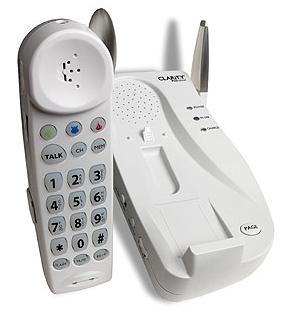
* However, the most amusing part was when I learned that the Best Boy couldn't stray too far from the office or else he'd be out of range for the cordless phone Production had set him up with that he had to carry around with him. This "no cell phone thing" probably wasn't very freeing for him.

Tuesday, May 28, 2013

Just Another Day At The Office.


My assignment seemed like a simple one: wire up all the practicals on our newest set before production was scheduled to shoot on it later today. Easy peasy...

...Until I saw the set.

It was an odd shaped room about a 100 feet long built on a stage and set dressing had amorously peppered it with sconces, lamps, televisions and computers every few feet... And not a whole lot of options when it came to plugging these devices in and making them work. Most of them would require a hole being drilled in the set somewhere just to able to feed a stinger through where the camera won't see it. And if you've ever fed power through a set wall (especially a double layered one), you know it can involve a lot of blind and frustrating finagling as you try to reach the other side. Not to mention that a number of these practicals didn't have a plug on them, which added an extra layer of "fun" to this challenge.

And I only had a couple hours to make it all work.

The first thing I did, as is with any kind of mission, was to gather supplies. I emptied out a nearby milk crate and filled it with cube taps, power strips, hand dimmers, wire nuts, sash, tape, zip cord*, add-a-taps, bailing wire, and anything else I might need. And then I went to work.

I spent the next few hours on my hands and knees, crawling around the floor trying to plug stuff in, or on a ladder as I tried to feed wires through the ceiling; only pausing to chase down other departments for more tools and supplies (a drill from construction, N.D. from grips for a light that can't dim, a wire hanger from wardrobe so I can fish cable through otherwise impossible walls, etc).

Eventually, my boss wandered to my set to check up on my progress. He saw how much I had left to do and how little time we had left, and immediately sent a colleague in to help me.

Two people tackling this job was better than one, but we soon encountered another road block: we were running out of supplies. My once filled milk crate was almost empty, leaving us with a dozen or so practicals left with no way to wire and power them.

That's when we started scrambling. With the shooting crew almost on their way, we pillaged and stole stingers, dimmers, zip cord*, etc from other sets. We dove into our own personal supplies of cube taps and ground lifts. It became a "do what you gotta do" moment.

And we had just gotten the last practical plugged in and burning when the company started rolling in...

Whew.

I had scrapes on my arm from reaching between set walls; bruises from various pieces of furniture; a minor wound from being stabbed by a stray wire; my knees hurt from crawling around and I desperately wanted a snack from crafty. But I was proud of what we had accomplished. It was not a lot of time for the task at hand, nor did we have the proper tools to make it work, but we pushed through, did our best, and despite some frantic moments in the last hour, we got the job done.

There were just a couple of final touches that needed doing, like labeling the lunchbox where we plugged the last few practicals in. So I was just on the other side of the set wall when I heard the Director say this as he was trying to figure out his first shot on this new set: "Can I see what this looks like with all the practicals off?"

And they stayed off for the entire scene.


*...or not.. ;)

Tuesday, May 21, 2013

Owning Gear.


In the comments for a previous post, Anonymous writes:
Why is it that on the lower rung/entry level of electric, NO ONE seems to talk about equity/assets/ owning gear? I've noticed on the top tier of features, a LOT of the guys (and girls) either own their own gear or have access/ good relationships with people who have access to gear. [...] It's a bargaining tool. It's something that a young electric could work on, which allows them to up their rate, gain a good reputation, etc yet no one talks about it. Yes, there is a risk in owning gear (it may sit around and not get used) for the most part I've noticed this hasn't been the case. A lot of people who work quite often have either owned their own gear or even also custom made specific lights [...] which can be used a bargaining tool with an APOC on productions..just saying. Rather than 'just wanting to get on a bigger set/shoots', I wish there were people who would be educating the new crop of G/E that they have SO many options to getting to the next rung! They don't just have to sit there and cling to the hope that someone will just 'notice' them..they can make things happen for themselves, too! 

Fist off, I think it's a pretty incorrect statement to say that NO ONE talks about owning gear when they're just starting out. I know I've personally been involved with discussions about it multiple times. Personally, I don't own gear because it's not worth it for me. As basic as some of our equipment may seem, it all costs a surprisingly high amount. Just one C-stand or baby stand alone costs somewhere in the $200 range, brand new. Carts are four figure prices. Even a humble milk crate is around $20. Hell, bags of sand are about $40. And that's not even getting into the expensive stuff like lights. It's all a pretty hefty price for someone, anyone, to pay, let alone someone who's just starting out in this business. Sure, you can probably score some gear used or 2nd hand, but the still decent stuff isn't that much cheaper. I'm a firm believer in you get what you pay for, and I don't believe in owning crap.

Not to mention all the work and cost that goes into maintaining the gear, storing it*, transportation, and obtaining insurance. Or that part about creating an LLC and the extra paperwork when it comes to tax time.

Even if I were to invest in my own equipment, I'd invest in grip rather than electric.** A large chunk, if not most, grip stuff has been the same for decades, holding its value over time. Stands, frames, sand bags, apple boxes, furniture blankets, clamps, etc, have remained pretty consistent through the years and are all pretty easy to maintain compared to other departments. Lighting is constantly evolving (arc lights and LEDs, anyone?) as are cameras (that super expensive camera you just bought will be out of date in six months... or less). Not to mention the abuse*** we put everything through. You can grease your fingers and drop a gobo head on the concrete ground all day and it'll still work as advertised. You can't say the same about lights and definitely not cameras.

But more the point of the original comment: There's a HUGE difference between a big show and an entry level one.

Let's say I landed on the sweet, sweet gig of being a lamp op on a totally fictional and made up big budget feature (like, Tom Cruise playing a Mavel superhero big). If I own any gear, it's sure as hell not going to end up on this show. I'm just a lamp operator with no bargaining power when it comes to getting me hired.**** Hell, Production doesn't even hire me. The Best Boy does. And he's going to hire me because I'm a good lamp op. He doesn't give a rats ass if I own any gear or not. If anyone's getting gear on the show, plus the rental fee that goes along with it, it'll likely be the Gaffer or the Best Boy.

Okay, so now let's pretend I'm the Gaffer on Tom Cruise Wears Tights And A Cape And Saves The World (aka: TCWTAACASTW for short), and I have gear for rent. Production has money. Are they going to rent from me? Not necessarily. On a show that size, they're hiring me because they want me as a Gaffer. The equipment factor is secondary, if it's even a factor at all. At this level, they're not looking for a "Gaffer that comes with gear." They're looking for a Gaffer that can do the job. Period. One thing has nothing to do with the other. In this case, it'd be more beneficial to me than them if I get my gear on this show. Production isn't getting the perk of getting equipment with the Gaffer; the Gaffer's getting the perk of getting their gear onto the show.

And how much gear do I have? Is it enough to supply the bulk of this show? Just owning an Arri Kit and some clip lights isn't going to cut it. We're talking 48 footer territory here. And, how much is Production willing to pay? Is it enough to cover my expenses/worth the hassle? Not only that, but how much are other rental houses willing to pay? Because I guarantee you they will at least poke around for other bids, and if someone can do it for cheaper, you're out of luck. All those questions are deciding factors to whether or not you can get your gear on a big show... If such a thing is even possible.

Yup. You read that right. IF it's possible. Big shows come attached with big studios and big contracts and sometimes, a "conflict of interest" arises. For example, some studios let you bring in your own equipment. Great! Some studios, however, require that you get gear from them. You want to shoot on their lot and use their stage? You have to use their gear (and write them a check for it). Bringing in your own stuff, especially if it's something the studio lamp dock already has, can be considered "a conflict of interest."

And it's not just studios or the big shows. I've been on more than one "medium" sized show where  Production had struck an exclusivity deal with a rental house: The rental house gives Production a sweet, sweet rate and in exchange, Production promises to not rent from anyone else. Ever. Meanwhile, despite me working on the show, my hypothetical gear is still gathering dust in a storage unit somewhere, hemorrhaging money by the minute.

Ask anyone who owns a complete lighting package (as in at least a truck's worth and not just enough to fill a cargo van): It's getting harder and harder to get your gear on a job.

Now, let's get to the "lower rung/entry level" shows. I will admit that having your own gear can be a bargaining chip here. There are countless "passion project" production companies out there looking for crew that can bring their own gear, but the question is, are they willing to pay for it? And if so (and that's a big "if") how much? Is it worth it? I can pretty much guarantee that you won't recoup your initial investment with just the one job, but yes, it might get you more work. But chances are, it'll be a lateral move from job to job. You can only get that gear onto shows that fit the job. That cargo van of miscellaneous gear you have isn't going from an ultra low budget shoot one weekend to TCWTAACASTW the next. It's going on to another ultra low budget film.... And another... And another. There is very little crossover from having your own gear on a low budget show to getting it on a high budget one. (Exception: You're already doing the big shows with your own gear and are "slumming it" during slow times on smaller jobs.)

There is, however, another option to owning gear that is often overlooked: Co-ops. There are (small) rental companies out there where the equipment is owned by a group of people. That way, not any one person is holding the burden of investment, and the gear has a higher chance of being rented out. Sometimes, you don't even have to be a member of a Co-op to reap the benefits. Often times, if you get their gear on a show (and this is true for a number of companies, especially the smaller ones) you get a cut of their profits. A win-win situation. However, the same questions asked above applies (how much gear is available; cost; insurance; etc.).

Owning your own gear at the beginner level probably won't be a big money maker, but what it might do is expose you to more (still low paying) jobs and in turn, more contacts. However, more contacts doesn't necessarily mean you'll climb up the ladder faster. After all, it's often about being at the right place at the right time meeting that right person who can get you on a bigger job. It's kind of like playing the lottery: You can up your odds by buying more tickets, but really, all it takes is one.

I'm not saying it's a bad idea to own your own equipment and I'm definitely not saying there aren't any benefits to it. These are just my own personal thoughts on the topic and are based on nothing but observation and my own experiences over the years. And, as always, there are a few exceptions to all of this. Basically, it all comes down to whether or not the risks outweigh the rewards and whether or not it's worth it to you.

For me, it's just not worth it.


* It might not be a problem if you have a garage, but most people I work with either live in an apartment or have a family that actually uses the garage to store cars. It used to be that you could store gear in certain rental houses, but I hear that's becoming more and more rare.

** But I'm not a grip. It wouldn't make much sense for me to invest in grip gear.

*** Don't be gentle. It's a rental!

**** Board Ops are a different story. As are kit rentals.

Monday, May 13, 2013

Nothing Is Free.


A colleague walked to set one morning wearing a hoodie emblazoned with the name of his last show. No doubt a wrap gift from Production.

I couldn't help but laugh when I saw it.

"You worked on that?" I asked him, gesturing to the name on his sweatshirt.

"Yeah. Why?"

"I knew a lot of people on that show. Even got called a few times to work on it, but I was always already booked on something else. I did hear a lot of horror stories from set though," I replied, with a sly smile on my face. The thought of my friend toiling on the hell that was that show was entertaining to me the same way you'd find it hilarious if a friend got hit in the balls.

"Sure, you laugh now," my colleague said with his own smirk on his face, "but I did get a pretty sweet free sweater out of it!"

I looked at his sweater and then back at him. "No.... You didn't get a free sweater. One way or another, you paid for that sweater."

He stood there for a second, confused. Then he laughed. "Yeah, I guess you're right. I fucking earned this stupid thing."

And that, he did. They worked ridiculously long hours on that show. And at locations that took a better part of a gas tank to get to. With a Production that kept changing its mind at the last minute, causing every department to perpetually scramble. All while being undermanned and paid what essentially amounts to a few dollars more than minimum wage. Those guys ended the day, every day, tired and exhausted as all hell, and often only got nine hours of turnaround before they had to do it all over again.

That sweater, as simple as it may be, wasn't free.

Nothing in this business is.

We may be envied by outsiders because we get "free" snacks on set all day, every day. But we also work six hours straight before we get a break. My Mom thinks I'm lucky that the company provides us lunch every day, not knowing about a California Labor Law that states "a suitable place for [eating lunch] must be designated," and "facilities must be available for securing hot food and drink or for heating food or drink." It's probably easier in terms of budget and time management for Production to just bring in a caterer if we're on location. And no one that thinks we have it made seems to remember that while they only work eight hours a day, a standard day for us is twelve.

And has anyone ever noticed that often times, the shittier the show, the better the food is? Productions have figured out long ago that we'll put up with a lot of crap as long as our taste buds are satisfied.

We may get catered meals, craft service tables and the occasional wrap gifts, but those all, in some way or another, come with a price. Nothing in this business is free.


Creative Commons License
This work is licensed under a Creative Commons Attribution-NonCommercial-NoDerivs 3.0 United States License .